
Bookshop.org recently complied a list of Political Books People Are Reading Now.
From that list, two books that I want to prioritize this year are One Day, Everyone Will Have Always Been Against This by Omar El Akkad and Open Veins of Latin America by Eduardo Galeano.
However, there are a few books I’d add to this list that I’ve read and gained a lot from.
If you plan to buy any of these books, buy from Bookshop.org and use their bookstore finder to select a bookstore in Minnesota to support. I recently bought two of these recommended books (since I’d listened to the audiobooks while marathon training), and a portion of my purchase went to Moon Palace Books.
Let me know what books you’d add to Bookshop.org’s list too!

1. The Truth About Immigration: Why Successful Societies Welcome Newcomers
By Zeke Hernandez
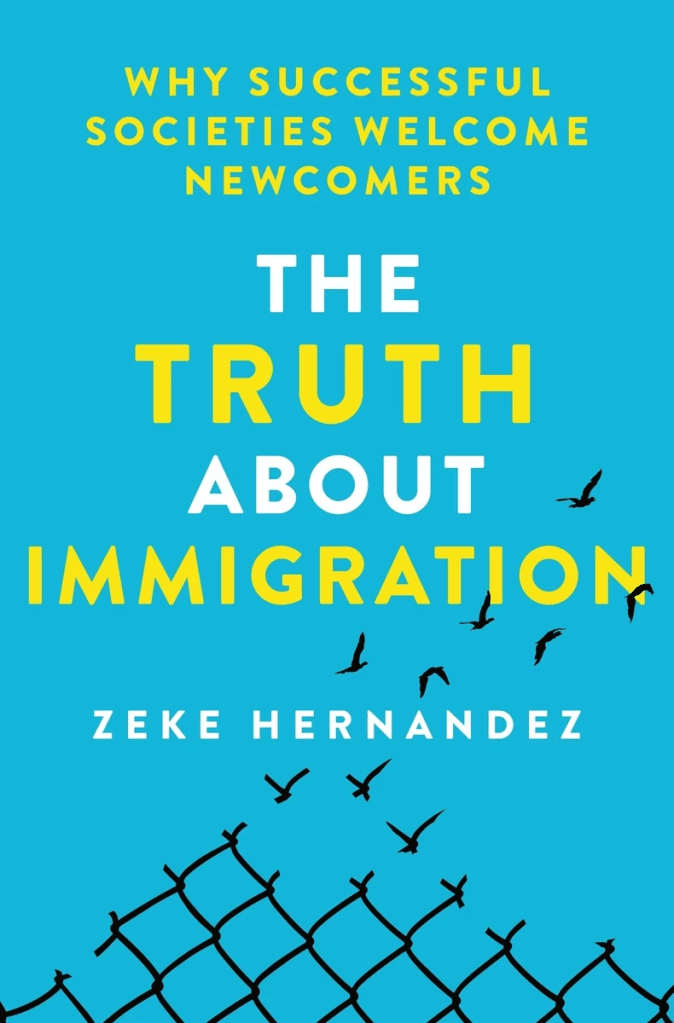
The go-to book on immigration: fact-based, comprehensive, and nonpartisan.
Immigration is one of the most controversial topics in the United States and everywhere else. Pundits, politicians, and the public usually depict immigrants as either villains or victims. The villain narrative is that immigrants pose a threat—to our economy because they steal our jobs; our way of life because they change our culture; and to our safety and laws because of their criminality. The victim argument tells us that immigrants are needy outsiders—the poor, huddled masses whom we must help at our own cost if necessary. But the data clearly debunks both narratives. From jobs, investment, and innovation to cultural vitality and national security, more immigration has an overwhelmingly positive impact on everything that makes a society successful.
In The Truth About Immigration, Wharton professor Zeke Hernandez draws from nearly 20 years of research to answer all the big questions about immigration. He combines moving personal stories with rigorous research to offer an accessible, apolitical, and evidence-based look at how newcomers affect our local communities and our nation. You’ll learn about the overlooked impact of immigrants on investment and job creation; realize how much we take for granted the novel technologies, products, and businesses newcomers create; get the facts straight about perennial concerns like jobs, crime, and undocumented immigrants; and gain new perspectives on misunderstood issues such as the border, taxes, and assimilation.
Most books making a case for immigration tell you that immigration is good for immigrants. This book is all about how newcomers benefit you, your community, and your country. Skeptics fear that newcomers compete economically with locals because of their similarities and fail to socially assimilate because of their differences. You’ll see that it’s exactly the opposite: newcomers bring enduring economic benefits because of their differences and contribute positively to society because of their similarities. Destined to become the go-to book on one of the most important issues of our time, this book turns fear into hope by proving a simple truth: immigrants are essential for economically prosperous and socially vibrant nations.
2. Jesus and John Wayne: How White Evangelicals Corrupted a Faith and Fractured a Nation
By Kristin Kobes Du Mez
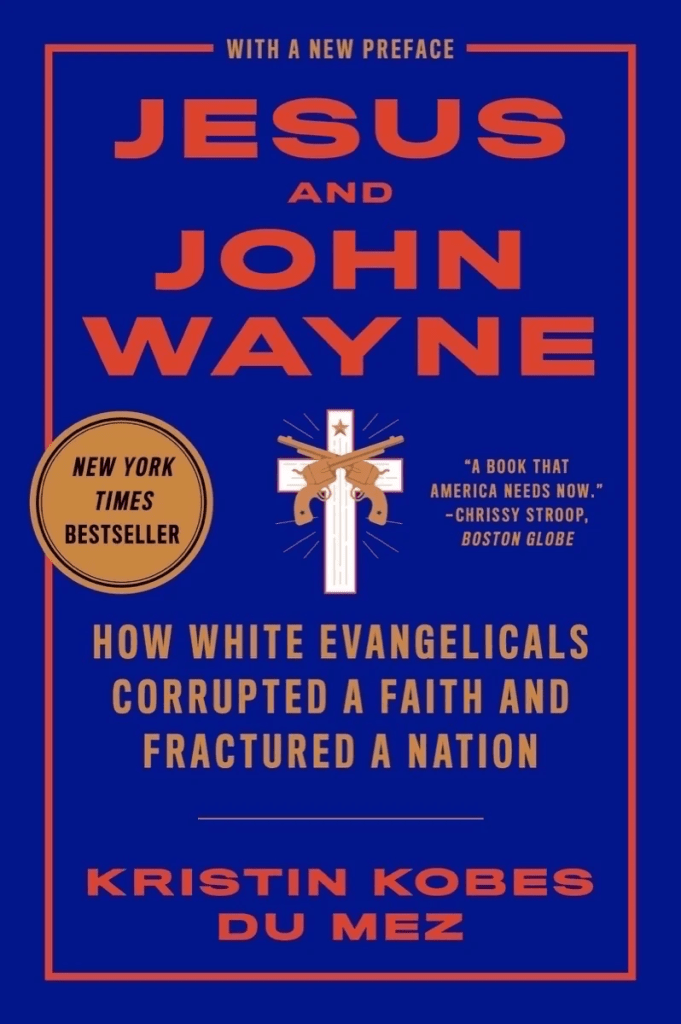
A scholar of American Christianity presents a seventy-five-year history of evangelicalism that identifies the forces that have turned Donald Trump into a hero of the Religious Right.
How did a libertine who lacks even the most basic knowledge of the Christian faith win 81 percent of the white evangelical vote in 2016? And why have white evangelicals become a presidential reprobate’s staunchest supporters? These are among the questions acclaimed historian Kristin Kobes Du Mez asks in Jesus and John Wayne, which explains how white evangelicals have brought us to our fractured political moment.
Jesus and John Wayne is a sweeping account of the last 75 years of white evangelicalism, showing how American evangelicals have worked for decades to replace the Jesus of the Gospels with an idol of rugged masculinity and Christian nationalism. Evangelical popular culture is teeming with muscular heroes – mythical warriors and rugged soldiers, men like Oliver North, Ronald Reagan, Mel Gibson, and the Duck Dynasty clan, who assert white masculine power in defense of “Christian America.” Chief among these evangelical legends is John Wayne, an icon of a lost time when men were uncowed by political correctness, unafraid to tell it like it was, and did what needed to be done.
A much-needed reexamination, Jesus and John Wayne explains why evangelicals have rallied behind the least-Christian president in American history and how they have transformed their faith in the process, with enduring consequences for all of us.
3. The Body Is Not an Apology, Second Edition: The Power of Radical Self-Love
By Sonya Renee Taylor, Foreword by Ijeoma Oluo
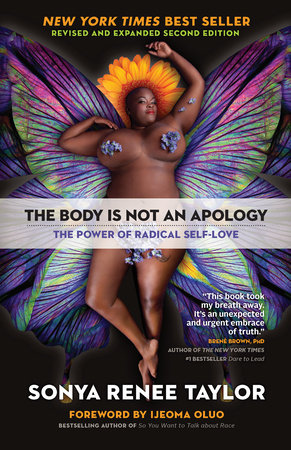
“To build a world that works for everyone, we must first make the radical decision to love every facet of ourselves…’The body is not an apology’ is the mantra we should all embrace.”
—Kimberlé Crenshaw, legal scholar and founder and Executive Director, African American Policy Forum
“Taylor invites us to break up with shame, to deepen our literacy, and to liberate our practice of celebrating every body and never apologizing for this body that is mine and takes care of me so well.”
—Alicia Garza, co-creator of the Black Lives Matter Global Network and Strategy + Partnerships Director, National Domestic Workers Alliance
“Her manifesto on radical self-love is life altering–required reading for anyone who struggles with body image.”
—Claire Foster, Foreword Review
Humans are a varied and divergent bunch with all manner of beliefs, morals, and bodies. Systems of oppression thrive off our inability to make peace with difference and injure the relationship we have with our own bodies.
The Body Is Not an Apology offers radical self-love as the balm to heal the wounds inflicted by these violent systems. World-renowned activist and poet Sonya Renee Taylor invites us to reconnect with the radical origins of our minds and bodies and celebrate our collective, enduring strength. As we awaken to our own indoctrinated body shame, we feel inspired to awaken others and to interrupt the systems that perpetuate body shame and oppression against all bodies. When we act from this truth on a global scale, we usher in the transformative opportunity of radical self-love, which is the opportunity for a more just, equitable, and compassionate world—for us all.
Let me know what books you’d add to Bookshop.org’s list of Political Books People Are Reading Now.

 Morgan Vega
[…] you need a place to start, pick up one of these nonfiction books and contact your […]
LikeLike